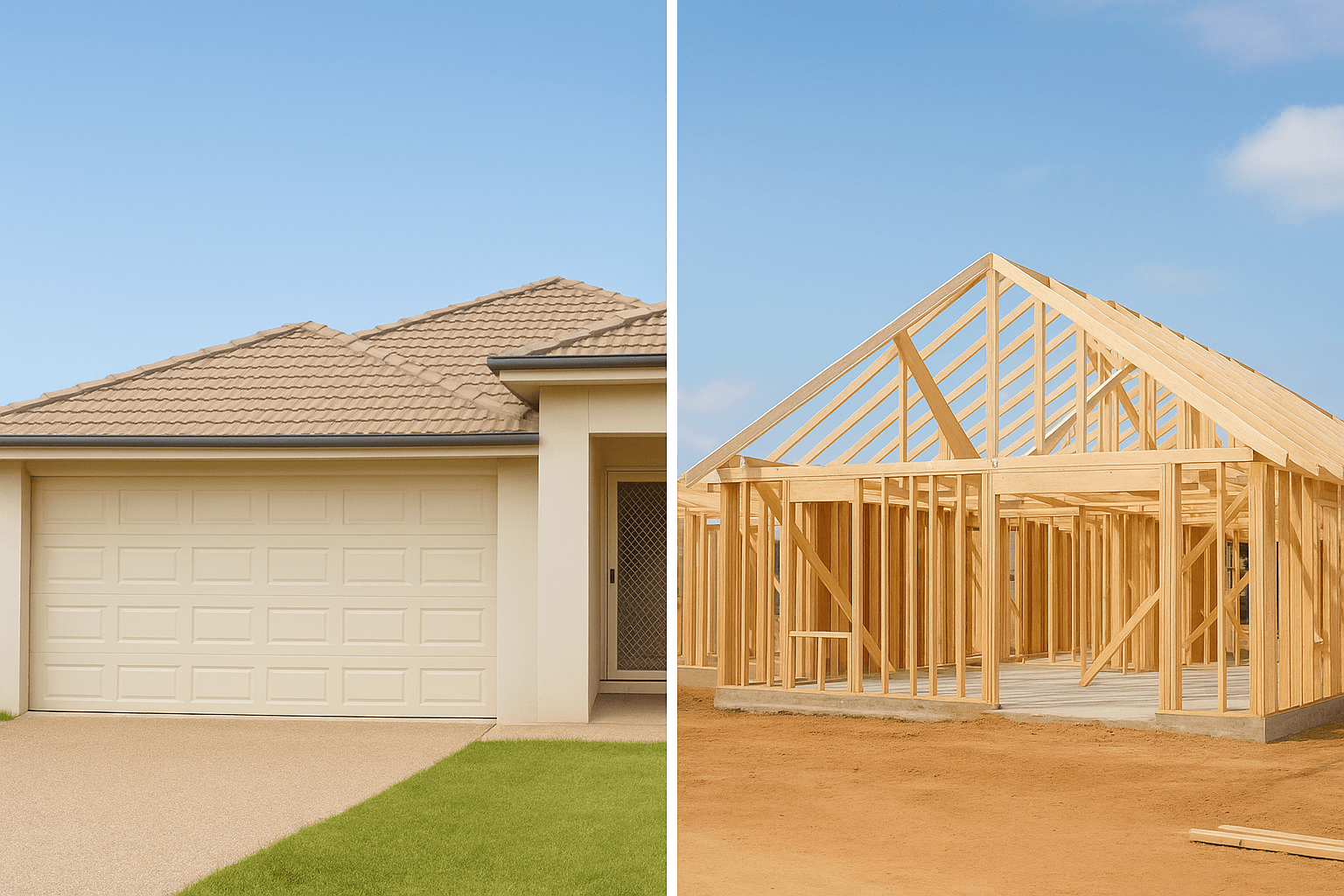
Buying or Building – Which Path Fits You Best?
Every first home buyer eventually faces the same question — is it better to buy an established home or build from scratch?
Both options can lead you to the dream of ownership, but they suit different budgets, lifestyles and timelines.
Let’s explore the pros, cons and key differences so you can decide what’s right for you.
1️⃣ The Main Differences at a Glance
| Aspect | Buying an Existing Home | Building a New Home |
|---|---|---|
| Timeframe | Move in quickly — typically 30–90 days | Can take 6–18 months depending on build and land |
| Cost predictability | Known up front | May change with material or labour costs |
| Customisation | Limited to renovations | Full design control |
| Maintenance | Older homes may need repairs | Everything brand new, under warranty |
| Grants available | Some state duty concessions | Usually qualifies for full First Home Owner Grant |
2️⃣ Buying an Established Home
Buying an existing property is the fastest route to home ownership. You can inspect what you’re getting, negotiate price, and move in soon after settlement.
✅ Advantages
- Shorter waiting time – perfect if you’re ready to move.
- Established areas with infrastructure and schools.
- Less decision fatigue – you can see the finished product.
⚠️ Considerations
- Older homes may need renovations or maintenance.
- Less likely to qualify for full First Home Owner Grant.
- Competition at auctions can push up prices.
3️⃣ Building a New Home
Building offers a blank canvas. You can choose your design, layout, and finishes — plus new homes often qualify for more government support.
✅ Advantages
- Eligible for most government grants and new-home incentives.
- Brand-new home under builder’s warranty.
- Energy-efficient design and modern technology.
- Less maintenance for years to come.
⚠️ Considerations
- Longer timeframe — land purchase, design, permits, construction.
- Costs can rise with supply shortages or design changes.
- Delays may mean paying rent and mortgage simultaneously.
4️⃣ Cost Comparison Example
| Expense | Buying Existing | Building New |
|---|---|---|
| Average price (Australia 2025) | $750,000 | $820,000 (house + land) |
| First Home Owner Grant eligibility | Often no (unless new) | Usually yes |
| Stamp duty | Full amount unless exempt | Only on land value (usually less) |
| Maintenance cost (first 5 yrs) | $15,000–$25,000 | $0–$5,000 |
Figures are indicative averages for 2025 and vary by state, builder, and property type.
5️⃣ House & Land Packages Explained
House & Land packages combine a land purchase with a pre-designed home build — often with fixed-price contracts.
They’re popular for first home buyers because they simplify the process and usually meet grant criteria.
- One contract for land, one for construction.
- Choose from builder designs or customise layouts.
- Usually eligible for the First Home Owner Grant and stamp-duty savings.
6️⃣ Location Considerations
Buying tends to give you more established suburbs closer to city centres.
Building often means new estates or regional growth corridors — with longer commutes but lower land prices.
- Research transport links, schools and amenities before buying land.
- Check council infrastructure plans — they affect long-term value.
- Regional builds may access extra government incentives.
7️⃣ Timeframe – What to Expect
- Buying: 30–90 days to settle and move in.
- Building: 6–18 months depending on design, weather, and approvals.
- House & Land Packages: typically 9–12 months total.
Allow time for council permits and pre-construction approvals when building — these are common delay points.
8️⃣ Long-Term Financial Impact
A new build generally costs more up-front but can save in the long run through lower maintenance and energy bills.
Older homes may appreciate faster if they’re in high-demand suburbs, giving stronger capital growth.
Your best option depends on your priorities — cash flow now, or capital growth later.
9️⃣ Common Mistakes to Avoid
- Not comparing total costs (land, site prep, landscaping, and driveways often excluded from build quotes).
- Assuming grants apply automatically — you must meet strict eligibility and timing rules.
- Underestimating build time and holding costs (rent + progress payments).
🔟 Which Option Is Better for You?
If you value speed, convenience, and location — buying might be better.
If you want a fresh start, low maintenance and government help — building could win.
Either way, run the numbers and talk to a broker before deciding.
Need help comparing options?
Book a free first-home strategy call with the Loan Location team.
We’ll compare buying vs building based on your deposit, goals and lifestyle.